
This from ‘The Learning Planet’ a blog associated with the Climate Museum project. The article discusses the implications of ‘tipping points’ in relation to the language of ‘change’, ‘crisis’, ’emergency’ and ‘catastrophe’, all associated with climate and ecosystems.

A tipping point is a threshold that, when exceeded, can lead to large changes in the state of the system. In the case of global climate disruption, these changes could mean a cascade of feedback effects that could destroy conditions for thriving biodiverse life and human civilisation.
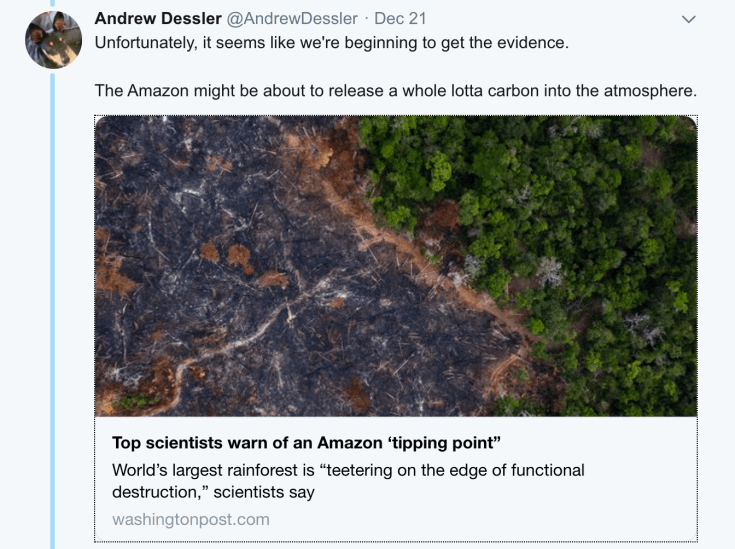 From a thread by Andrew Dessler
The terms for climate have very quickly moved from ‘climate change’ to ‘climate crisis’ to ‘climate emergency’. (Side note, this should always be read as ‘climate and ecological emergency’, with intersecting causes and impacts of ecocide, fossil fuel emissions and ecosystems collapse.)
Arguably, there has been a climate emergency since it was known that fossil fuels were altering the global carbon cycle and raising temperatures (1940s – 1960s). On the other hand, there are valid criticisms of the use of the term ’emergency’ because it calls to mind authoritarian governments cracking down on freedoms to implement extreme…
View original post 430 more words
 ecoartscotland.net
Leave a comment