Happy New Year and reminder about deadlines for the 2016 eco-art projects Jane Ingram Allen curates in Taiwan

Two amazing opportunities from Jane Ingram Allen

Reviewer needed: The Green Bloc

Thanks to James Brady for highlighting this.  We'd very much like to have Maja Fowkes new book 'The Green Bloc Neo-avant-garde Art and Ecology under Socialism' reviewed for ecoartscotland. Given Richard Demarco's many years engineering exchanges between Eastern Europe and Scotland there may be a thread of particular relevance.  If you are interested in reviewing... Continue Reading →

What can the arts contribute to a Land Use Strategy for Scotland?

The Scottish Government is consulting on a new Land Use Strategy for Scotland. This builds on the first Strategy (2011) and also on the two pilot studies done (Aberdeenshire and the Scottish Borders). At the heart of the Land Use Strategy are the ideas of Natural Capital and Ecosystems Services Assessment. and the use of... Continue Reading →

Chris Fremantle: ‘ The Hope of Something Different’

Thinking through the relation between social/community and environmental/ecological art practices.

François Matarasso's avatarFrançois Matarasso

‘One of the most fundamental rights is to have your understanding of the world recognised and valued’.

Chris Fremantle

Participatory art is a rich and diverse practice. Much of its energy comes from the creative tensions between different theories and visions, as may be seen from some of the reaction to the Turner Prize jury’s choice. But art is not only intellectual and rational. It is felt, perceived, practiced and experienced. Some of the most creative discussions happen within projects, between artists and participants (or, as I’d prefer to say, between professional and non-professional artists). That is why I think of it as a restless art.

And so this project, in its conception and unfolding, is a space for discussion, reflection and development. Other voices are not just welcome: they are intrinsic to what it is trying to do. They are being heard in the meetings and conversations I’m having…

View original post 127 more words

Local energy economies; where infrastructure fails, innovation succeeds | Nesta

This article from NESTA, continuing the theme on energy policy, highlights some interesting examples of innovation occurring on the edge, in this case the Scottish Islands. Grid limitations or total lack of grid connectivity have prompted new approaches to better use of energy and better approaches to equality. Very glad to see the social and... Continue Reading →

Future Works Changes Everything

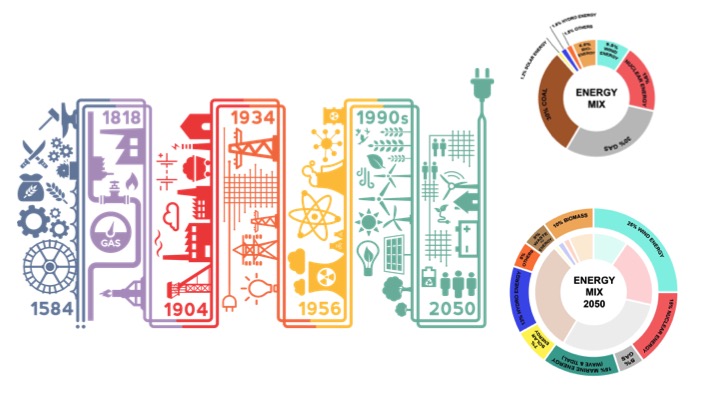
What should our energy mix be in the future? And what was it like in the past?  Really good starting points for thinking at regional scale and developing research.

jmu.'s avatarFuture Works

We are Sheffield School of Architecture, MArch Studio Future Works 2015-2016, looking at energy, industry and manufacturing. Over the next six months we will be designing, both collectively and individually for the future of this region. This initial stage of our project has taken our team to several existing factory precedents and allowed us to observe a variety of industrial processes. The studio’s main driver is to explore the typology of ‘Future Factories’ with a particular focus on energy.

Slide2

The pie charts on the right indicate the current energy situation in the UK.

The majority of energy is currently provided by non-renewable sources. 30% is sourced from coal and 30% from gas. A further 19% is produced from nuclear energy power plants with a further 4 additional plants planned for completion in the near future. At present 19% is supplied by renewable sources.

By 2050 we would love to see…

View original post 1,096 more words

Website Powered by WordPress.com.

Up ↑